
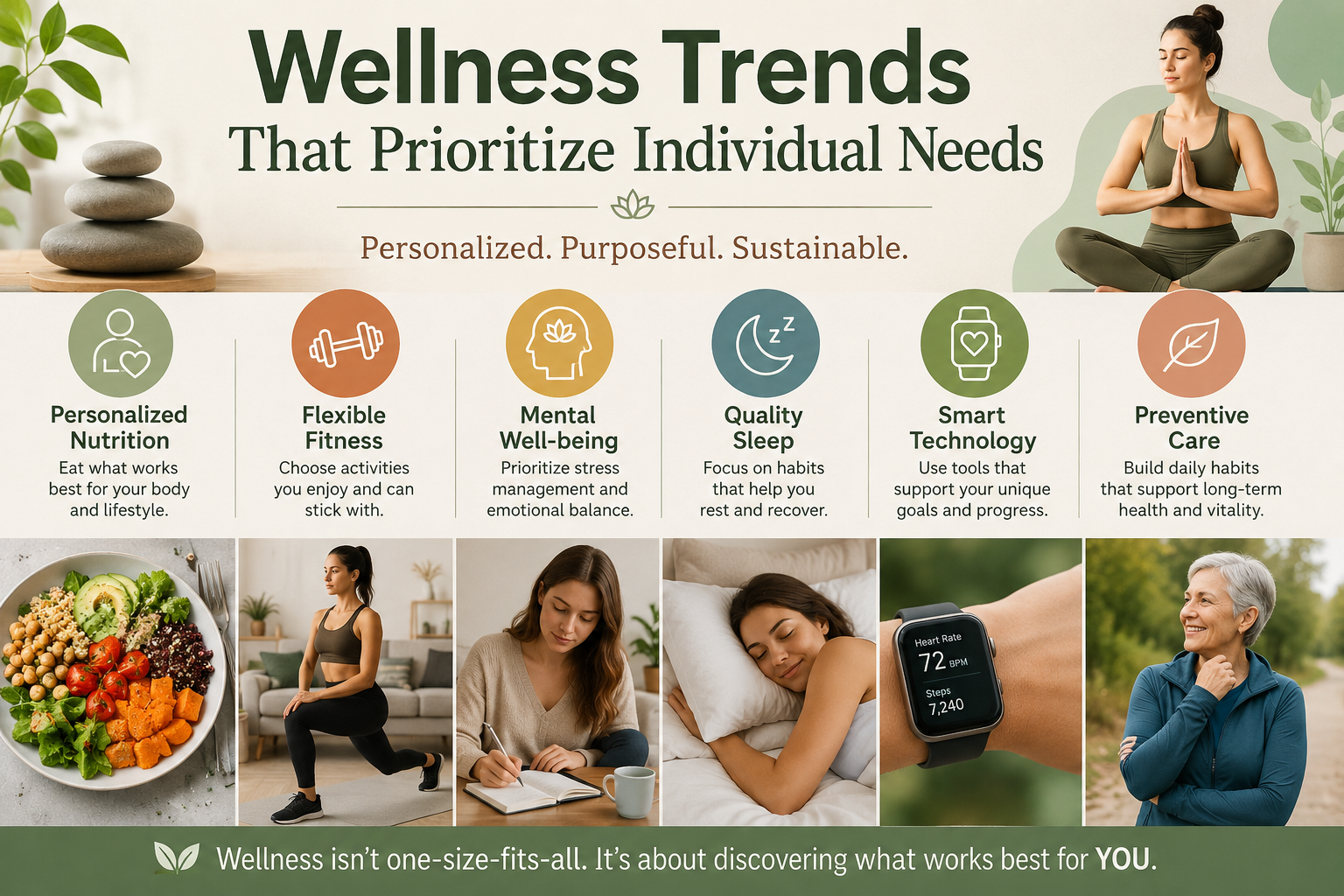
Wellness is increasingly moving away from the idea that one routine can work for everyone. Instead, people are looking for approaches that fit their schedules, preferences, physical needs, budgets, and everyday realities.
This shift is helping shape Wellness Trends That Prioritize Individual Needs, a broader movement toward personalization rather than rigid formulas. Whether someone wants to improve sleep, become more active, manage stress, eat more thoughtfully, or simply create a healthier routine, the most useful approach is often the one that can realistically fit into their life.
Personalized wellness does not necessarily mean expensive technology, intensive programs, or complicated routines. In many cases, it means paying closer attention to individual circumstances and making practical choices that can be maintained over time.
Why Personalized Wellness Is Becoming More Important
Traditional wellness advice often presents general recommendations as if they apply equally to everyone. But people’s lives are different. Work schedules, family responsibilities, fitness levels, dietary preferences, financial circumstances, and personal goals can all influence what is realistic.
A wellness routine that works well for someone with plenty of free time may be impractical for a person working long hours. Similarly, an intense exercise program may not be appropriate for someone returning to physical activity after a long break.
The growing emphasis on individual needs recognizes this difference.
Instead of asking, “What is the perfect wellness routine?” people are increasingly asking, “What approach makes sense for me?”
Moving Beyond One-Size-Fits-All Advice
Personalization can be as simple as adjusting the timing, intensity, frequency, or format of a healthy habit.
For one person, a morning workout may be enjoyable. Another may prefer walking during lunch or exercising in the evening. Both approaches can support an active lifestyle if they are appropriate for the individual and sustainable.
The same principle applies to nutrition, sleep routines, stress management, and other areas of wellness.
Personalized Fitness Is Becoming More Flexible
Fitness is one area where individualization is particularly visible. People now have access to a wide range of exercise formats, from traditional gyms and group classes to walking programs, home workouts, recreational sports, mobility sessions, and outdoor activities.
The important trend is not necessarily a particular exercise style. It is the growing recognition that movement should fit the person’s goals and circumstances.
Someone training for an event will have different requirements from someone whose main objective is simply to become more active.
Choosing Activities That Are Sustainable
Enjoyment can play an important role in consistency.
If a particular form of exercise is unpleasant or impossible to fit into a person’s schedule, maintaining it can become difficult. A more practical alternative may be a lower-impact activity, shorter sessions, or a different type of movement altogether.
People should also consider their current abilities and any relevant medical or physical limitations. When there are concerns about starting or changing an exercise program, professional guidance can be appropriate.
Nutrition Is Becoming More Individualized
Another major area of personalized wellness is nutrition.
Instead of following every new diet trend, many people are becoming more interested in eating patterns that reflect their preferences, cultural backgrounds, schedules, health needs, and practical circumstances.
A sustainable eating pattern generally needs to be realistic. A complicated plan that requires expensive ingredients or extensive preparation may be difficult to maintain for someone with limited time or resources.
Focusing on Sustainable Food Choices
Individualized nutrition does not mean that every popular food trend is suitable for everyone.
People have different nutritional requirements and may have allergies, intolerances, medical conditions, or other considerations that affect their choices. For specific health concerns, individualized advice from a qualified healthcare or nutrition professional is more appropriate than generalized online recommendations.
The broader wellness trend is about making food choices that people can realistically maintain rather than constantly switching between restrictive plans.
Sleep Wellness Is Becoming More Personal
Sleep is another area where individual differences matter.
People naturally have different schedules, responsibilities, and routines. While consistent sleep habits are generally useful, the practical steps needed to create a better environment can vary considerably.
Some people may benefit from a more consistent bedtime, while others may need to examine evening screen habits, caffeine timing, bedroom conditions, or work-related disruptions.
Understanding Personal Sleep Patterns
Tracking sleep can sometimes help people identify patterns, but consumer devices should not automatically be treated as medical diagnostic tools.
The useful question is whether information helps someone understand their habits and make sensible adjustments.
Persistent or serious sleep problems may require discussion with a qualified healthcare professional rather than relying solely on wellness products or apps.
Mental Well-Being Needs a Personalized Approach
Mental wellness is also becoming less focused on universal solutions.
Different people manage stress in different ways. Some may find physical activity helpful, while others prefer creative activities, social connection, time outdoors, structured routines, or relaxation practices.
The key is identifying approaches that are appropriate and genuinely useful for the individual.
Wellness practices can support everyday well-being, but they should not be presented as substitutes for professional mental health care when someone is experiencing significant or persistent difficulties.
Making Space for Real Life
A personalized approach also recognizes that wellness routines do not have to be perfect.
Work deadlines, family commitments, travel, financial pressures, and unexpected events can disrupt even the best plans. A flexible routine can make it easier to return to healthy habits without turning a temporary setback into an all-or-nothing failure.
Technology Is Helping Personalize Wellness
Digital tools are increasingly being used to customize wellness experiences. Fitness trackers, sleep-monitoring devices, meditation apps, nutrition platforms, and digital fitness programs can provide information that users can incorporate into their routines.
However, more data does not automatically mean better decisions.
Users should understand what a device actually measures and avoid treating estimates as definitive medical information. Privacy is another consideration, particularly when apps collect sensitive personal or health-related data.
Using Technology as a Tool, Not a Rulebook
Technology can provide reminders, trends, and useful feedback. But it should support personal judgment rather than dictate every decision.
For example, someone may use an activity tracker to notice that they spend most of their day sitting. That information could encourage more movement. It does not necessarily mean the user needs to pursue a specific daily target regardless of circumstances.
Preventive Wellness Is Gaining Attention
Individualized wellness also places greater emphasis on prevention and everyday habits.
Rather than waiting for a problem to become serious, people may pay more attention to sleep, physical activity, nutrition, stress, social connection, and routine healthcare.
Preventive care should still be based on appropriate professional recommendations. Wellness trends should complement—not replace—routine medical care and evidence-based treatment.
The Rise of Practical Self-Care
Self-care has also become more closely connected to realistic daily needs.
It does not have to involve expensive products, luxury experiences, or elaborate routines. For some people, self-care might mean setting boundaries around work, getting enough rest, spending time with friends, taking a walk, or creating uninterrupted time for a meaningful activity.
The most valuable approach is often the one that addresses an actual need rather than following a trend simply because it is popular.
Quality Over Quantity
A long list of wellness habits can become another source of pressure.
Instead, people can focus on a few meaningful behaviors and assess whether they are helping. This approach can make wellness feel less like a checklist and more like an adaptable part of everyday life.
How to Build a More Individualized Wellness Routine
Creating a personalized routine starts with understanding the person’s priorities.
Someone may want to improve energy, become more active, sleep more consistently, reduce daily stress, or develop healthier eating habits. Identifying one or two priorities can make the process more manageable.
From there, the person can choose realistic actions, monitor how they feel and perform, and make adjustments when circumstances change.
There is no requirement for a wellness routine to look impressive. Its value comes from whether it supports the person’s goals and can be maintained in real life.
Conclusion
The most meaningful Wellness Trends That Prioritize Individual Needs are not about finding a universal formula. They reflect a broader understanding that health and well-being are influenced by individual goals, circumstances, preferences, abilities, and responsibilities.
Personalized fitness, flexible nutrition, practical self-care, individualized sleep habits, mindful use of technology, and preventive care can all play a role. The strongest approach is one that remains realistic, evidence-aware, and adaptable.
Ultimately, wellness should fit into life—not require life to revolve around wellness.
FAQs
1. What does personalized wellness mean?
Personalized wellness means adapting health and lifestyle habits to an individual’s goals, preferences, circumstances, abilities, and practical needs rather than following a universal routine.
2. Why are individualized wellness routines becoming popular?
People have different schedules, priorities, preferences, and health considerations. Personalized approaches can make wellness practices more realistic and easier to maintain.
3. Can technology help create a personalized wellness routine?
Yes. Apps and wearable devices can provide information about activity, sleep, or other habits. However, users should understand the limitations of these tools and avoid treating consumer data as medical diagnosis.
4. Does personalized wellness replace professional healthcare?
No. Wellness practices can complement healthy living and preventive care, but they should not replace appropriate medical evaluation, diagnosis, or treatment.
5. How can someone start a personalized wellness routine?
Start by identifying one or two meaningful goals, choose realistic habits that fit daily life, monitor progress, and adjust the routine as circumstances and needs change.









Leave a Reply