
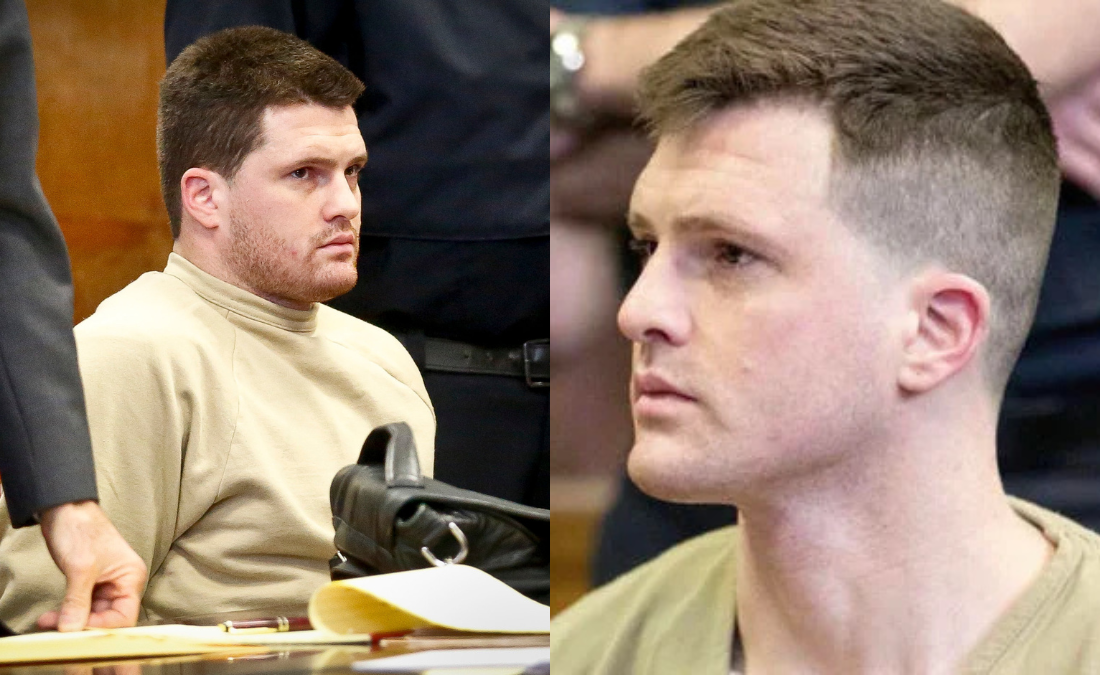
The story of James Rackover and Joey Comunale became one of the most shocking murder cases connected to New York City’s nightlife in the 2010s. It involved a late-night party, a luxury Manhattan apartment, a violent killing, and a disturbing attempt to hide what happened afterward. The case also brought attention to James Rackover’s unusual personal history and his close relationship with celebrity jeweler Jeffrey Rackover.
Joey Comunale was only 26 years old when he traveled from his home in Stamford, Connecticut, to New York City for a night out with friends. What began as an ordinary evening of socializing ended in tragedy after he attended an after-party at James Rackover’s apartment. Joey was later reported missing, and investigators eventually discovered that he had been killed. His body was found buried in New Jersey days later.
James Rackover was convicted of second-degree murder in connection with Joey Comunale’s death. Lawrence Dilione and Max Gemma were also connected to the events surrounding the case and faced different criminal charges and sentences. The investigation became widely known because of the evidence collected from surveillance cameras, phones, social media, witness statements, and the complicated accounts given by those involved. The case was later examined in major true-crime coverage, including 48 Hours and other documentary programs.
Who Is James Rackover?
James Rackover had a complicated background long before the murder case brought his name into national attention. He was born James Arthur Beaudoin II and later legally changed his surname to Rackover. His earlier life in Florida was very different from the wealthy Manhattan lifestyle that he later appeared to enjoy.
After moving to New York, James developed a close relationship with Jeffrey Rackover, a successful luxury jeweler who had become known in the media as a jeweler to wealthy and famous clients. Jeffrey became an important figure in James’s life and reportedly helped him with housing, education and employment. Their relationship was often described as a surrogate father-and-son relationship.
James eventually legally adopted the Rackover surname. He moved into a luxury apartment at the Grand Sutton building in Manhattan, where Jeffrey Rackover provided significant financial support. This change in James’s life later became one of the most discussed parts of the murder investigation because the public discovered that James Rackover had previously lived under the name James Beaudoin.
The relationship between James and Jeffrey also led to widespread speculation. However, reliable reporting described Jeffrey as a father figure and benefactor to James. The important fact in understanding the case is that James was not Jeffrey Rackover’s biological son. Their relationship was a close personal arrangement that eventually allowed James to use the Rackover surname and live a very different lifestyle in New York.
Joey Comunale and the Night He Went to Manhattan
Joseph “Joey” Comunale was from Stamford, Connecticut. He was a Hofstra University graduate and was remembered by family and friends as an active, social young man with a strong connection to his family. On November 12, 2016, Joey went into Manhattan with friends for a night out.
During the evening, Joey went to the Gilded Lily nightclub in Manhattan. There, the events began that would eventually lead him to James Rackover’s apartment. Joey encountered Lawrence “Larry” Dilione and Max Gemma, and the group later became connected with James Rackover.
The night continued after the club closed. An after-party was arranged at Apartment 4C at the Grand Sutton, a luxury building on East 59th Street. The apartment belonged to the world James Rackover had entered through his relationship with Jeffrey Rackover.
Several people attended the gathering. Reports from the investigation showed that the group was drinking and using cocaine. Women who had attended the party later left, while the remaining events inside and around Apartment 4C became the focus of the murder investigation.
Surveillance evidence became extremely important. Cameras helped investigators reconstruct Joey’s final known movements. Joey was seen entering the building, but he was never seen leaving alive. As his family became increasingly worried after losing contact with him, investigators began tracing the events of his final night.
What Happened Inside Apartment 4C?
Apartment 4C became one of the most recognizable locations connected with the Joey Comunale murder case. The apartment was where the after-party continued after the group left the nightclub, and it later became the center of the criminal investigation.
According to accounts presented during the investigation, an argument developed after the women had left the gathering. Lawrence Dilione later gave police an account in which he described an exchange involving Joey and a disagreement connected with what the people at the party had contributed, including references to cocaine and cigarettes.
Dilione admitted that he became angry and physically attacked Joey. The precise sequence of what happened afterward became one of the most important disputed issues in the case. Prosecutors argued that James Rackover also participated in the fatal violence. Rackover’s defense argued that Dilione was responsible for the murder and that Rackover’s criminal actions were connected primarily to the cover-up.
The evidence presented by prosecutors, however, convinced the jury that Rackover was criminally responsible for Joey’s murder. Reports described Joey as suffering a brutal beating and stabbing during the attack. The violence ended the life of a 26-year-old man who had simply gone to New York City for a night out.
What made the case especially disturbing was the fact that the violence was followed by efforts to conceal what had happened. The investigation was therefore not only about the killing itself but also about the actions taken afterward by those connected to the apartment.
The Discovery of Joey Comunale’s Body
After Joey disappeared, his family and friends became desperate to find him. They used social media and information about his final movements to help understand where he had gone and who he had been with. Joey’s disappearance quickly became a serious concern because he had not simply stopped communicating; his behavior was completely out of character.
Investigators examined surveillance footage and spoke with people connected to his final hours. Their investigation eventually led authorities to discover that Joey had not left the Manhattan apartment and continued toward the people who had attended the after-party.
The investigation ultimately revealed that Joey’s body had been transported from New York to New Jersey. His remains were discovered in Oceanport, New Jersey, in a shallow grave. Reports stated that his body had also been burned before being buried.
The discovery confirmed the worst fears of Joey’s family and transformed the missing-person investigation into a major homicide case. The removal and concealment of Joey’s body also became an important part of the charges later brought against those involved.
The evidence collected during the investigation showed how important modern surveillance and digital information had become. Cameras, social-media activity, phone records and witness accounts all helped investigators build a timeline. Without this evidence, understanding what happened during Joey’s final hours would have been far more difficult.
James Rackover’s Murder Trial and Conviction
James Rackover’s trial became the central legal battle in the Joey Comunale case. The main question was the extent of Rackover’s involvement in the killing. Rackover’s defense did not deny that terrible events happened after Joey died. Instead, the defense attempted to separate the murder itself from the later cover-up.
Rackover’s lawyers argued that Lawrence Dilione was responsible for the actual killing. They maintained that Rackover became involved after the fatal attack and was guilty of helping cover up what happened rather than committing the murder itself.
Prosecutors presented a very different case. They argued that the evidence showed Rackover directly participated in the violence that killed Joey. The jury heard evidence connected with the attack, the movements of those involved and the subsequent efforts to conceal Joey’s body.
In November 2018, the jury found James Rackover guilty of second-degree murder. He was also convicted of additional crimes connected with hindering prosecution and concealing a human corpse.
The verdict was a major moment for Joey’s family, who had spent nearly two years waiting for the criminal case to move through the courts. The conviction established that Rackover was legally responsible for Joey Comunale’s death.
Rackover was sentenced the following month to 28 and two-thirds years to life in prison. The sentence included the punishment for the murder conviction and additional punishment related to the crimes committed after Joey’s death. It was described as the maximum sentence available in the case.
Lawrence Dilione and His Role in the Case
Lawrence “Larry” Dilione was another central figure in the events surrounding Joey Comunale’s death. He had been at the nightclub and later attended the after-party at Apartment 4C.
Dilione’s statements became especially important because he admitted that he had attacked Joey. He described becoming angry during an argument and physically assaulting him. However, there were conflicting accounts about exactly how the killing developed and the role played by James Rackover.
Dilione initially faced serious murder charges. His criminal case did not ultimately proceed in the same way as Rackover’s trial. In January 2019, he pleaded guilty to first-degree manslaughter as part of a plea agreement.
He received a 23-year prison sentence. His case therefore ended with a manslaughter conviction rather than a jury verdict for murder.
The difference between the cases reflected the different legal paths taken by the defendants. Rackover went to trial and was convicted by a jury of second-degree murder, while Dilione entered a guilty plea to first-degree manslaughter.
Both men received long prison sentences, reflecting the seriousness of Joey’s death and the events that followed. Their cases remain closely connected because they were together during the critical period surrounding the killing and were both accused of involvement in the attack and cover-up.
What Happened to Max Gemma?
Max Gemma was also connected to the after-party and became the third major person prosecuted in relation to the case. However, Gemma’s legal situation was different from those of James Rackover and Lawrence Dilione.
Gemma was not convicted of Joey Comunale’s murder. Prosecutors instead accused him of criminal actions connected with what happened after the killing. The allegations focused on hindering the investigation and tampering with evidence.
Gemma eventually pleaded guilty to hindering prosecution and tampering with physical evidence. He received a six-month jail sentence. Reports later stated that he served approximately four months before being released in August 2019.
His case shows why all three names remain connected in public discussions of Joey Comunale’s death even though they received very different criminal outcomes. Rackover was convicted of murder, Dilione pleaded guilty to first-degree manslaughter, and Gemma pleaded guilty to crimes involving the concealment and investigation of the events.
There is much less reliable public information about Gemma’s private life following his release. For that reason, claims about his current personal activities should be treated carefully unless supported by reliable recent reporting. What is firmly established is the role of his conviction and sentence in the legal history of the case.
Jeffrey Rackover and the Celebrity Jeweler Connection
Jeffrey Rackover became a major name in public coverage of the case because of his unusual relationship with James. Jeffrey was a successful high-end jeweler who had built a reputation working with expensive jewelry and wealthy clients.
He had been described in media coverage as a jeweler to the stars. His business and connections placed him in a world very different from James Beaudoin’s earlier life in Florida.
Jeffrey helped James establish himself in New York. He reportedly provided financial support, helped with education and employment, and paid for the Manhattan lifestyle that included the apartment where Joey Comunale was later killed.
This connection led to enormous public attention after James’s arrest. A civil lawsuit was also filed against Jeffrey by Joey’s father, alleging that he had been involved in aspects of the aftermath. Jeffrey denied wrongdoing, and it is important to distinguish allegations in a civil lawsuit from a criminal conviction.
Jeffrey Rackover was not convicted of Joey Comunale’s murder. The criminal convictions in the case involved James Rackover, Lawrence Dilione and Max Gemma in different ways.
Jeffrey’s relationship with James nevertheless remains one of the most unusual parts of the story. James legally adopted Jeffrey’s surname, publicly lived as his son and received significant support from him. When the murder case revealed James’s earlier identity as James Beaudoin, the relationship became a major subject of media investigation.
Where Is James Rackover Now?
James Rackover remains in prison following his conviction for the murder of Joey Comunale. His 28 and two-thirds years to life sentence remains the defining legal outcome of the case.
The murder conviction established that the jury rejected the argument that Rackover was merely involved in covering up the crime. Instead, he was found guilty of second-degree murder, along with the related crimes connected to what happened after Joey’s death.
The case has continued to attract attention many years later through true-crime programs and renewed media coverage. Recent reporting has identified Rackover as continuing to serve his sentence in New York, with an earliest reported possible release date in 2045. A life maximum also means that release after the minimum period is not automatic.
The case remains important to the Comunale family because no prison sentence can undo what happened to Joey. His death changed the lives of his parents, relatives and friends forever.
For the public, the story continues to raise questions about violence, privilege, friendship, loyalty and the decisions people make after a crime. It also shows how quickly an ordinary night can turn into a tragedy with consequences lasting decades.
James Rackover’s name will remain permanently connected with the Joey Comunale murder because of his conviction and long prison sentence. The story of Apartment 4C also continues to be remembered as one of the most disturbing New York City homicide cases of its era.
Conclusion
The James Rackover case is a tragic story that began with a night out in New York City and ended with the murder of Joey Comunale. Joey entered Manhattan expecting to spend time with friends and enjoy an ordinary evening, but he became involved with people he had met during the night and eventually went to an after-party at Apartment 4C.
What happened afterward led to a violent death, an attempt to conceal the crime and an investigation that crossed from Manhattan into New Jersey. Surveillance footage, witness accounts, social media and physical evidence helped investigators uncover Joey’s final movements and eventually find his body.
James Rackover was convicted of second-degree murder and sentenced to 28 and two-thirds years to life in prison. Lawrence Dilione pleaded guilty to first-degree manslaughter and received 23 years, while Max Gemma pleaded guilty to crimes involving hindering prosecution and evidence tampering and received a much shorter sentence.
The connection between James and Jeffrey Rackover added another unusual dimension to the story. James had entered a wealthy Manhattan world through his relationship with the celebrity jeweler, legally changing his name and becoming publicly known as James Rackover. Yet that new identity could not prevent investigators from uncovering his past or holding him accountable for his role in Joey Comunale’s death.
Years later, the case continues to be discussed because of the shocking events inside Apartment 4C and the complicated relationships surrounding those involved. At its heart, however, the story remains about the loss of Joey Comunale and the devastating impact his death had on the people who loved him.





Leave a Reply