
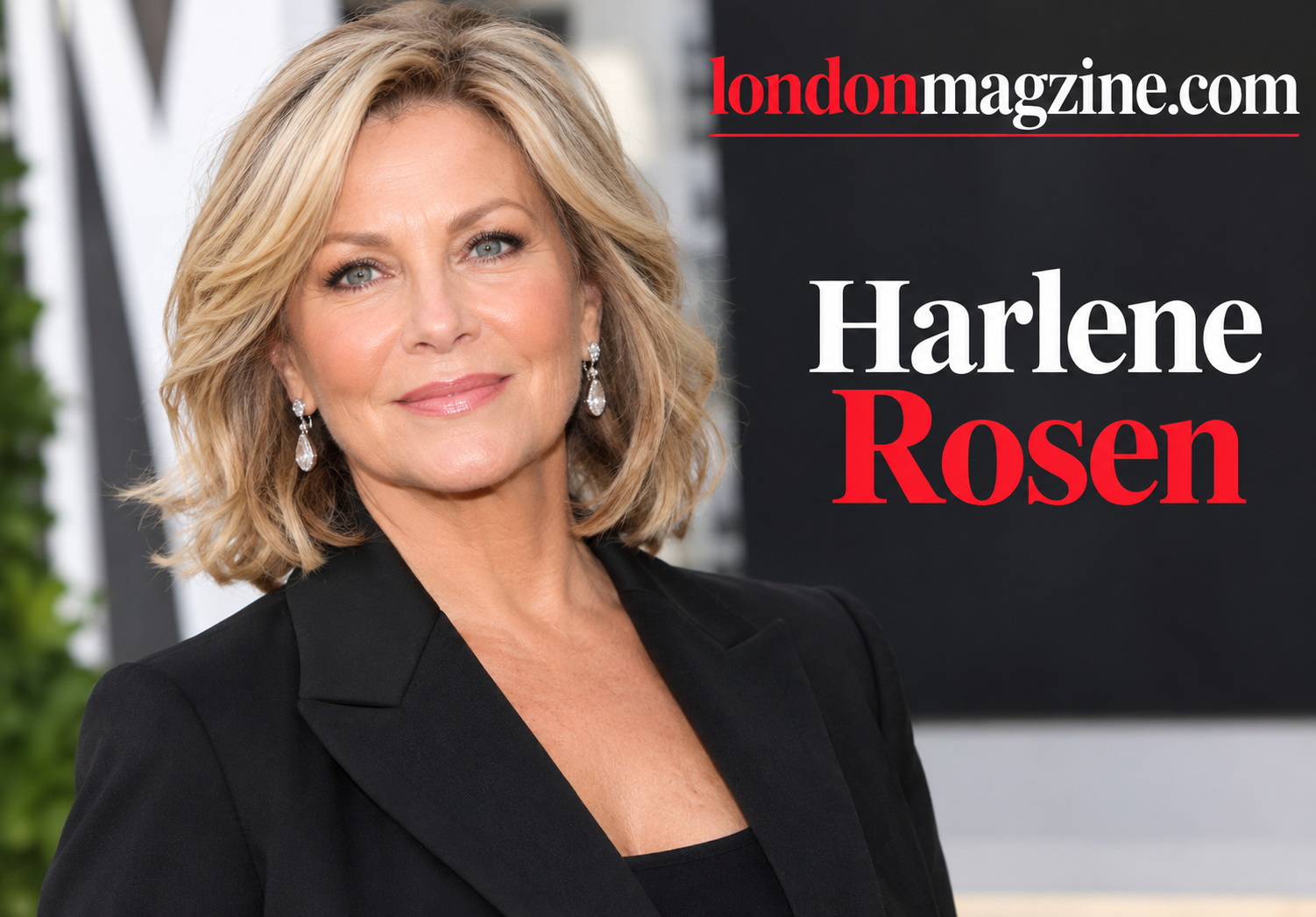
Harlene Rosen married Woody Allen in 1956, years before he became a major filmmaker. Her name later appeared in his comedy, but much of her own life remained outside the public record.
A relationship that began before fame
Harlene Rosen is remembered principally because she was Woody Allen’s first wife. The important detail is timing: their marriage began when Allen was still a young comedy writer, not the internationally recognised director associated with Annie Hall, Manhattan and Midnight in Paris.
The marriage is consistently documented as beginning in 1956. The end date is less straightforward. The Guardian lists the marriage as 1956–1962, while a 1972 TIME profile said the relationship lasted about five years. Other biographical accounts distinguish between an earlier separation and the later legal divorce.
One chronology published in connection with a major biographical reference work records that Allen married Rosen on March 15, 1956, in Hollywood, before the couple returned to New York.
Who was Harlene Rosen before she became “Woody Allen’s wife”?
Reliable information about Rosen’s childhood is surprisingly limited.
What is better documented is her education. The Guardian described her as the daughter of a shoe-shop owner and a philosophy student at Hunter College. The Encyclopedia of American Humorists likewise describes Rosen as a teenage philosophy major at Hunter when she married Allen.
That context changes the usual picture.
Rosen was not an aspiring Hollywood actress. She was a young student whose life became connected to a comedian before his career had reached its later scale.
Her academic interests also influenced Allen during their early years together. The Guardian reported that after the marriage, Allen arranged for a Columbia University tutor to help him work through major writers and philosophers, including Plato, Aristotle, Dante and James Joyce. The source does not establish that Rosen was responsible for Allen’s intellectual development, but it does show that her academic world formed part of their shared environment.
When the private marriage became public material
This is where Rosen’s story becomes more complicated.
After the relationship deteriorated, Allen began turning aspects of his marriage into comedy material. Retrospective accounts describe him using nicknames and jokes about his former wife in stand-up performances and television appearances.
The dispute eventually moved beyond comedy.
A 1991 Los Angeles Times review of Eric Lax’s biography of Allen records that Rosen sued Allen and NBC for $1 million, alleging that his jokes defamed her. The review also raised a separate historical problem: much of the available account of the marriage had been told from Allen’s perspective, leaving Rosen’s side largely absent.
That criticism matters when reconstructing her story today.
Comedy routines are performances, not neutral biographies. Allen’s descriptions of his first marriage cannot automatically be treated as an objective account of Rosen herself.
A rare statement from Rosen
For decades, Rosen remained largely outside the public conversation surrounding Allen.
Then, in 2015, she resurfaced in an unusual way.
Biographer David Evanier said he spent more than a year trying to locate Allen’s first wife before finding her. Rosen then provided a birthday message for Allen’s 80th birthday, which was included in Evanier’s Woody: The Biography.
Her message offered a different perspective from the one preserved in Allen’s old routines.
She recalled their youthful relationship, their shared interest in movies and music, and the fact that while Allen established his career, she completed four years of college. She also acknowledged that the marriage had been difficult while describing the period as one in which they supported each other and grew into adulthood.
That statement does not erase the conflict that followed their divorce. It does, however, provide something missing from much of the earlier record: Rosen’s own recollection of the relationship.
What happened to Harlene Rosen afterward?
This is the part of the story where responsible reporting requires restraint.
No reliable public source reviewed for this article establishes a detailed account of Rosen’s later career, current residence, finances or personal relationships. Numerous celebrity-biography websites publish precise claims about these subjects, but those claims are not consistently supported by strong primary or major journalistic sources.
So the mystery is not that Rosen’s later life has been secretly uncovered. It is almost the opposite.
The public record becomes thin once her connection to Allen ends. There is evidence of her education, the marriage, the later legal dispute and her 2015 communication with Evanier. Beyond that, assumptions easily begin to replace documentation.
The answer behind the mystery
Harlene Rosen was much more than a name attached to Woody Allen’s early biography, but the surviving record cannot reconstruct every part of her life.
What can be established is that she married Allen in 1956 as a very young woman, studied philosophy at Hunter College, lived through a difficult marriage during the formative years of his comedy career, and later became involved in a legal dispute over the way he publicly discussed her. Decades afterward, she chose to speak about their shared past in notably measured terms.
The final piece of the puzzle is therefore also the simplest: Rosen’s story remains partly private because she lived much of it away from the spotlight. Any account that presents the unverified details of her later life as established fact is working beyond what the available evidence supports.
Author Bio:
Staff Writer is a human-interest journalist specialising in celebrity biographies, archival research and fact-checking public claims. Their work focuses on separating documented history from the assumptions that accumulate around famous names.







Leave a Reply