
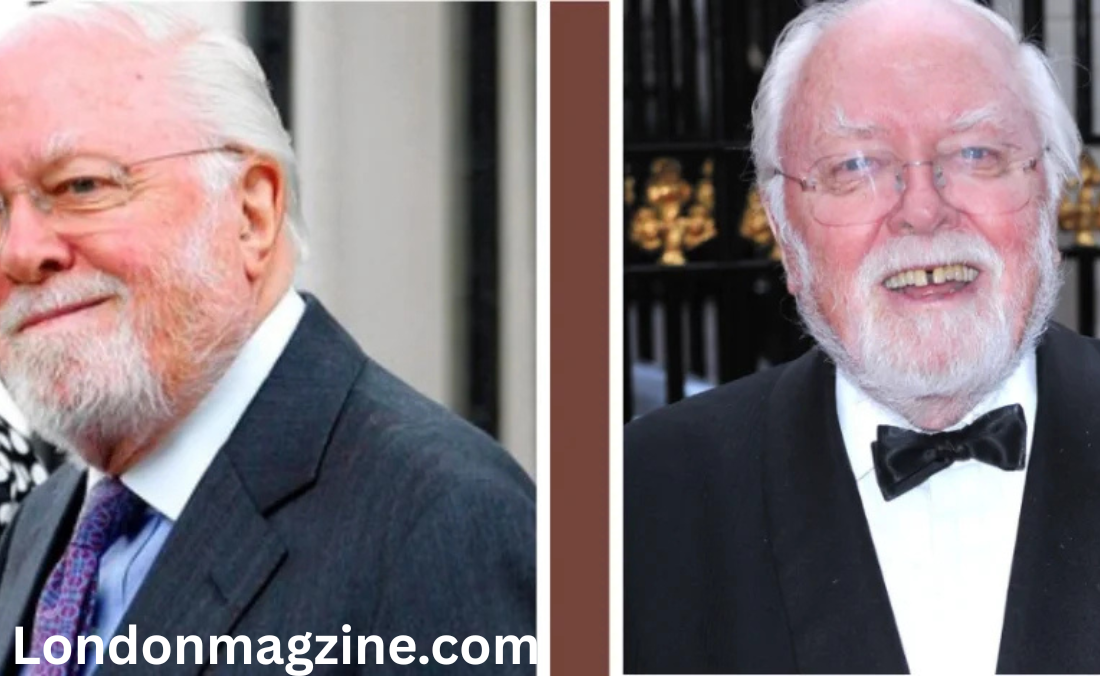
Who Is Robert Attenborough?
Robert Attenborough is best known as a biological anthropologist and academic researcher. Although his family name is internationally recognized because of Sir David Attenborough, Robert followed a different professional direction. Instead of broadcasting documentaries, he developed expertise through university teaching, scientific research, fieldwork, and academic publications.
Biological anthropology examines humans from biological and evolutionary perspectives. It can involve subjects such as population history, health, genetics, adaptation, ecology, and human variation. Robert’s research interests have particularly involved human population biology and health, with an important focus on New Guinea and the Pacific region.
His career demonstrates how a well-known family connection does not necessarily define an individual’s professional identity. In Robert’s case, the strongest public evidence about his career comes from academic institutions and research-related records rather than entertainment media.
Robert Attenborough and the Attenborough Family
The surname Attenborough is strongly associated with broadcasting, film, science, and education. Robert is the son of Sir David Attenborough and Jane Elizabeth Ebsworth Oriel. His family connection naturally attracts interest, but available public information about his personal life is considerably more limited than information about his academic career.
Sir David became internationally recognized for his natural-history broadcasting career, while Robert established himself in biological anthropology. Their professional paths are different, although both involve an interest in understanding life and the natural world.
It is important to distinguish documented family information from claims repeated by low-authority biography websites. Details about Robert’s private relationships, finances, residence, or other personal matters should not be presented as established facts without reliable supporting evidence.
His Academic Career at Australian National University
One of the most important institutions in Robert Attenborough‘s career is the Australian National University in Canberra. He spent many years at ANU and was involved in biological anthropology teaching and research. Public accounts of his academic career describe his arrival at the university in 1981 and his contribution to the development of biological anthropology there.
His work at ANU included teaching subjects related to human biology and anthropology. He also contributed to academic program development and student supervision. This type of university work requires more than publishing research; academics often build courses, mentor students, collaborate with colleagues, and help develop research programs.
ANU continues to identify Robert Attenborough as an Honorary Senior Lecturer, reinforcing his continuing connection with the institution.
Research Interests and Biological Anthropology
Robert Attenborough’s research is centered on human population biology and health. His work has included research involving populations in New Guinea, where biological, environmental, cultural, and demographic factors can intersect in complex ways.
Population biology asks questions about how populations change over time. Researchers may examine population size, movement, genetics, health patterns, environmental pressures, and demographic changes. These subjects can help scientists understand both historical human populations and contemporary health challenges.
Research in this area is often collaborative. Field studies can involve universities, local communities, medical researchers, anthropologists, and other specialists. The resulting information can contribute to a broader understanding of human adaptation and variation.
Robert Attenborough and New Guinea Research
New Guinea has been an important geographical focus in Robert Attenborough’s academic work. The region is particularly significant for anthropology because of its considerable biological and cultural diversity.
Research involving communities in Papua New Guinea can examine relationships among health, nutrition, environment, population structure, and social conditions. Such research requires careful fieldwork and sensitivity toward the communities involved.
This is also where scientific research resembles a well-designed information system. Researchers collect observations from multiple sources, verify them, organize the information, and then analyze relationships between different variables. The goal is not simply to gather large amounts of data but to produce reliable knowledge.
Robert Attenborough and the University of Cambridge
Robert Attenborough is also publicly associated with the University of Cambridge’s McDonald Institute for Archaeological Research, where he is listed as a Senior Fellow. His research profile includes human population biology and health as well as human evolutionary and behavioural ecology.
This Cambridge connection illustrates the continuing academic relevance of his work. Universities such as Cambridge bring together researchers from archaeology, anthropology, genetics, biology, and related disciplines. These interdisciplinary environments can be particularly useful when studying long-term human development.
Rather than focusing on celebrity recognition, Robert’s public professional identity is therefore connected to academic expertise and research.
Understanding His Career Through a Cloud Architecture Analogy
Cloud architecture provides an interesting way to understand how modern research careers operate. A cloud platform normally separates different functions: storage holds information, computing processes it, networking connects systems, and security controls access.
Academic research can work in a comparable way. Fieldwork produces observations, databases store information, statistical methods process results, and publications distribute findings to other researchers. Each part has a different purpose, but the complete system depends on the parts working together.
For a beginner, imagine a research project as a scalable cloud application. Raw field observations are similar to data stored in a database. Analysis is the processing layer. Published findings are the output layer. Peer review and academic standards provide an important quality-control mechanism.
This analogy also explains why research cannot be judged only by the visibility of its final results. A reliable system depends on strong foundations, just as credible research depends on careful methodology.
Comparison: Robert Attenborough and Sir David Attenborough
| Area | Robert Attenborough | Sir David Attenborough |
|---|---|---|
| Main field | Biological anthropology | Natural-history broadcasting |
| Professional focus | Human population biology, health and evolutionary research | Wildlife, nature and conservation communication |
| Public profile | Primarily academic | Internationally recognized broadcaster |
| Major association | Australian National University and University of Cambridge | BBC and natural-history television |
| Research/communication style | Academic research and teaching | Documentary storytelling and broadcasting |
| New Guinea connection | Research interest and fieldwork | Broader natural-history interests |
The comparison shows that both members of the family have developed careers connected with science and the natural world, but their professional roles are substantially different. Robert’s work is primarily academic, while David’s public career has centered on communicating natural history to large audiences.
Privacy, Accuracy and Online Information
Searching for Robert Attenborough can produce conflicting information. Some websites publish precise claims about his age, private life, finances, or family circumstances, but these details are not consistently supported by authoritative sources.
For that reason, readers should give greater weight to university profiles, institutional records, academic publications, and established reporting. One recent academic-focused profile specifically notes that details such as Robert’s exact birth information and private family life are inconsistently reported online.
This distinction matters for trustworthy biography writing. A person’s connection to a famous family can generate substantial online interest, but popularity of a claim does not make it accurate.
Why Robert Attenborough’s Career Matters
Robert Attenborough’s career is significant because it illustrates the value of specialized academic work. Biological anthropology may not receive the same public attention as television or entertainment, yet research in human biology and population health contributes to broader scientific understanding.
His work involving New Guinea also demonstrates the importance of studying human populations within their environmental and cultural contexts. Human biology is not isolated from geography, nutrition, disease, behavior, and social conditions.
From an information-management perspective, research of this type also highlights the importance of secure data handling, reliable documentation, scalability, and collaboration. Modern academic projects may involve large datasets, international teams, digital archives, and long-term preservation requirements. These challenges resemble those faced by cloud architects building systems that must remain secure and dependable as data volumes increase.
Challenges in Academic Research and Future Relevance
Academic research faces challenges that extend beyond collecting information. Researchers must consider data quality, funding, ethical standards, collaboration, reproducibility, and the responsible interpretation of results.
Technology is also changing how anthropology is conducted. Digital databases, geographic information systems, statistical computing, genetic analysis, and cloud-based collaboration can allow researchers to work with increasingly complex datasets.
Security is particularly important when research involves sensitive information about individuals or communities. Access controls, encryption, backup strategies, and carefully defined data-retention policies can help protect research materials.
The future of biological anthropology is likely to become increasingly interdisciplinary. Genetics, archaeology, environmental science, public health, and computational methods can work together to answer questions that were difficult to investigate in earlier generations.
Frequently Asked Questions
Who is Robert Attenborough?
Robert Attenborough is a British biological anthropologist and academic researcher whose professional work has focused on human population biology, health, evolutionary anthropology, and research involving New Guinea.
Is Robert Attenborough related to David Attenborough?
Yes. Robert Attenborough is publicly identified as the son of Sir David Attenborough and Jane Elizabeth Ebsworth Oriel.
Where did Robert Attenborough work?
He spent a substantial part of his academic career at the Australian National University in Canberra. He is also associated with the University of Cambridge’s McDonald Institute for Archaeological Research.
What does Robert Attenborough study?
His academic interests include human population biology and health, human evolutionary and behavioural ecology, and biological anthropology, with particular interest in New Guinea and the Pacific region.
Is Robert Attenborough a television personality?
No. Unlike his father, Robert’s professional identity is primarily academic. His public career has centered on research, teaching, and anthropology rather than television broadcasting.
Conclusion
Robert Attenborough has developed a distinctive career within biological anthropology, building his professional reputation through research, teaching, and academic collaboration rather than public entertainment. His connection to Sir David Attenborough explains much of the public curiosity surrounding his name, but his own career has a separate identity.
The most reliable picture of Robert comes from academic and institutional information: his work at the Australian National University, his association with Cambridge, and his research interests in human population biology, health, evolution, and New Guinea.
His story is ultimately less about celebrity and more about scholarship. It shows how a relatively private academic can make a meaningful contribution to understanding human populations while maintaining a professional life largely outside the public spotlight.








Leave a Reply